Mostrar mensagens com a etiqueta Klipsch. Mostrar todas as mensagens
Mostrar mensagens com a etiqueta Klipsch. Mostrar todas as mensagens
domingo, 27 de setembro de 2015
Hörtest: Klipsch KMC 3 vs. Altec Lansing IMT800

Habe mich heute mit einem Freund getroffen, um mir seinen neuen Klipsch KMC 3 demonstrieren zu lassen. Da wir in der Zwischenzeit getauscht haben (ich hatte seinen TDK A33, er meinen Altec Lansing MIX) haben wir das Treffen genutzt, um beide Boomboxen ein wenig miteinander zu vergleichen. Der kleine Soundlink Mini, den ich auch mit hatte und stolz präsentieren wollte war schnell vergessen, denn wir konzentrierten uns auf die großen, fetten Dinger.


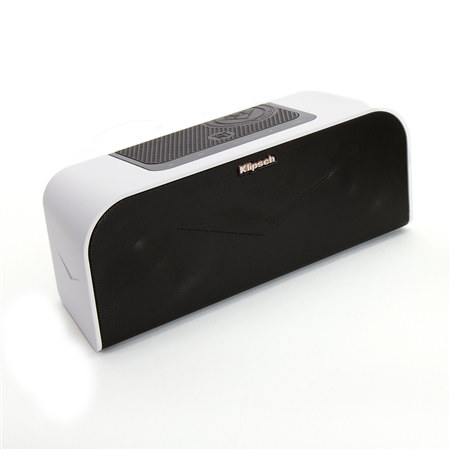
Der Klipsch erinnert zumindest in den weissen Version wie hier sehr wage den alten Apple Hifi. War der Apple Hifi jedoch ein rechteckiger Kasten, fällt hier die ähnliche Formgebung vom Klipsch und Altec Lansing auf. Bin mir nicht sicher, ob das akustische Gründe hat, aber beide sind nach hinten hin an den Seiten im exakt gleichen Winkel abgeschrägt. Der Klipsch ist etwas kompakter als mein Altec Lansing, ist vom Gewicht jedoch kaum leichter. Mit Batterien im Inneren sind beide ziemliche Brocken zum Schleppen. Mein Freund nutzt jedoch lieber ein externes kompaktes Akkupack, das ihm mehrere Stunden Musik bei hoher Lautstärke ermöglicht. Das Akkupack ist selbst kaum größer als ein tragbarer Discman, weshalb es sicher eine bessere Alternative darstellt, als jedes mal dicke Batterien kaufen zu müssen, beide Geräte benötigen nämlich 8 D-Zellen.
Klanglich sind beide auf ähnlichem Niveau. Der Altec Lansing lässt sich jedoch dank eingebautem EQ nach Geschmack etwas anpassen. Entweder man benützt die eingebauten Presets, sowie die zusätzliche Regelung Bass/Treble, oder man wechselt für ein feineres Tuning zum Mehrband-EQ. Beim Klipsch muss man sich mit dem begnügen, was er von Haus aus bietet, und das ist eine Menge. Insgesamt klingt er zwar etwas weniger klar als der Altec Lansing, aber im Bassbereich doch druckvoller. Der Bass klingt nicht übertrieben aufgebläht, sondern präzise und tief. Ich schätze der Klipsch reicht 10hz tiefer runter als der Altec Lansing. Wo sich der Klipsch dann voll behaupten kann, ist bei höheren Lautstärken. Auch der Klipsch fährt den Bass immer stärker zurück, je lauter es wird, aber beim Altec Lansing ist das viel deutlicher, außerdem spielt der Klipsch auch um einiges lauter.

Insgesamt hat mich der Klipsch schon recht beeindruckt, ich konnte ihn zwar nicht innen hören, aber für draussen wäre er auf jeden Fall die bessere Wahl. Er ist kleiner, spielt lauter und hat im Bassbereich mehr Power. Wo der Klipsch nicht so punkten kann, ist bei leisen Lautstärken, im unteren Lautstärkebereich klingt er nicht ganz so fett.

Bleibt die Frage nach dem Preis. Den Altec Lansing konnte man teilweise bereits schon um 149,- kaufen, ansonsten wurde er um knapp 200,- verkauft. Interessanterweise findet man ihn derzeit kaum noch, wahrscheinlich auch aufgrund des veralteten Apple-Docks. Der Klipsch verbindet sich dagegen per Bluetooth oder Aux, kostet jedoch beinahe überall 399,-
Ob der Preis bald fallen wird, ist eher unwahrscheinlich. Aber auch die 399 ist der Klipsch durchaus wert und fegt teurere B&W Zeppelins oder Libratone Zipps locker vom Tisch.
Wer eine halbwegs portable Boombox sucht, jedoch die fetten JVC-Teile nicht herumtragen will, sollte sich unbedingt den Klipsch mal anhören und auch mal aufdrehen, da kommt wirklich was raus!

Small is beautiful: der Klipsch "KMC-1" und "Gig"
Etwas untergegangen ist die Vorstellung von 2 interessanten portablen Lautsprechern von Klipsch. Nämlich dem KMC-1, sowie dem Gig.


Der KMC-1 sieht aus wie eine geschrumpfte Version des KMC-3, den ich dank eines Freundes auch schon kurz testen konnte, und der mich ziemlich beeindruckt hat. Wenn ich heute eine portable Boombox mit möglichst viel Power benötigen würde, würde ich sicherlich den KMC-3 erwägen.
Der KMC-1 scheint hingegen eher ein Konkurrent der BIG Jambox zu werden, die mich persönlich nie wirklich umgehauen hat. Ich könnte mir vorstellen, dass Klipsch bei dieser Größe doch mehr rausholen kann. Akku ist eingebaut und das Teil soll 40 Watt Spitze liefern. Der Lautsprecher ist außerdem in vielen verschiedenen Farben erhältlich.

Der Gig scheint dafür eher eine Antwort auf Bose's Soundlink Mini, bzw die normale Jambox zu sein. Klipsch verspricht hier einen "Full-Range" Sound, wobei der Frequenzgang mit 77 bzw. 64Hz im Bass angegeben wird. Den Gig gibt es in weiss und schwarz, die ausklappbare Hülle selbst ist in mehreren Farben als Zubehör erhältlich.
 Ein genaues Datum zur Lieferbarkeit habe ich leider noch nicht entdeckt. Man darf also gespannt sein, ob Klipsch hier wirklich klangliche Maßstäbe setzen wird, oder ob man wieder nur mit weiteren 0815-Bluetoothlautsprechern im bereits undurchsichtigen Markt rechnen kann.
Ler mais »
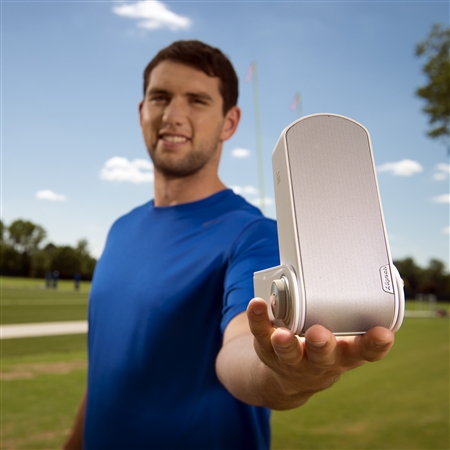
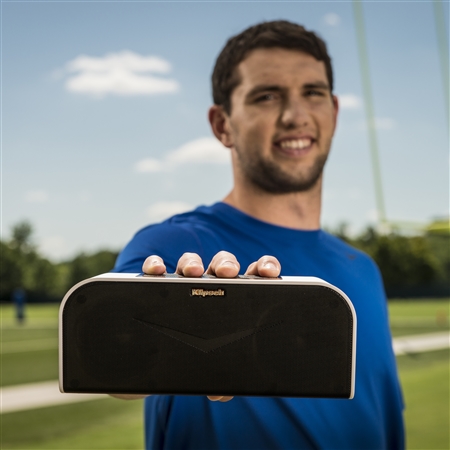
Der KMC-1 sieht aus wie eine geschrumpfte Version des KMC-3, den ich dank eines Freundes auch schon kurz testen konnte, und der mich ziemlich beeindruckt hat. Wenn ich heute eine portable Boombox mit möglichst viel Power benötigen würde, würde ich sicherlich den KMC-3 erwägen.
Der KMC-1 scheint hingegen eher ein Konkurrent der BIG Jambox zu werden, die mich persönlich nie wirklich umgehauen hat. Ich könnte mir vorstellen, dass Klipsch bei dieser Größe doch mehr rausholen kann. Akku ist eingebaut und das Teil soll 40 Watt Spitze liefern. Der Lautsprecher ist außerdem in vielen verschiedenen Farben erhältlich.
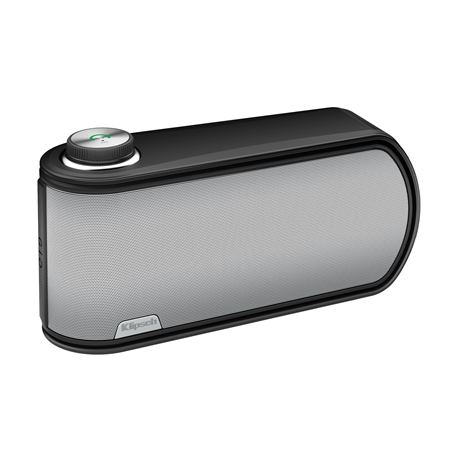
Der Gig scheint dafür eher eine Antwort auf Bose's Soundlink Mini, bzw die normale Jambox zu sein. Klipsch verspricht hier einen "Full-Range" Sound, wobei der Frequenzgang mit 77 bzw. 64Hz im Bass angegeben wird. Den Gig gibt es in weiss und schwarz, die ausklappbare Hülle selbst ist in mehreren Farben als Zubehör erhältlich.
Review: Klipsch KMC-1, the big letdown!

I started becoming interested in Klipsch speakers, when I heard the KMC-3 my friend brought along so we could compare it to my Altec Lansing MIX.
Infact the Klipsch wiped the floor with my Altec Lansing producing an overall louder and more punchy sound despite being smaller. But for portable use the KMC-3 needed battteries and for my taste it was still a bit large to really being taken with me.
Then Klipsch announced the smaller KMC-1 which looks nearly like the big brother, but much smaller sizewise, which should allow to be taken everywhere easily. It also includs a rechargeable battery, so that I thought I should give it a try if this could be the best mobile boombox so far?

The KMC-1 which stands for "Klipsch Music Center" came inside a rather large and heavy box. The speaker itself is about the size of a Big Jambox thus considerably larger than the Bose Soundlink Mini for example.

Despite having a plastic body, look and feel of the speaker are really positive, as it has some heft to it and feels pretty sturdy at the same time. The paint of the main body has a kind of soft feel, the front and back speaker mesh is out of metal, the top plate which contains the NFC-enabled area is rubberized. I assume the whole area is also meant for placing your mobile phone. It has about the size of a standard phone, though a larger phablet would look rather out of place there.

There are hardly any hardware-buttons on the device. There is only the main power switch at the back. There you can also find an auxiliary input and the AC-power input. In addition the KMC-1 is also equipped with an USB-output, which can be used to charge external devices. In fact this also works when the speaker is running from its internal battery, but it will of course reduce overall playing time.
On top of the speaker you can find a single touch-sensitive area with another power/standby button, a pairing button and the volume control with an additional light-chain showing the actual volume level. Unfortuantely the volume of the speaker is not synchronized to the volume of the connected device. An additional battery/call-button reveals that the KMC-1 even has hands-free included.

There is nothing written in the manual if the internal battery can be replaced, but at the bottom there is a screwed down cover which most likely should contain the battery. I haven't looked inside, so I cannot say if the battery is some specific model or if a standard battery pack can be used.

Powering the speaker on will play a cheesy guitar-chord as confirmation tone. Bluetooth pairing is forced through a longer touch of the pairing-symbol. When successfully paired another guitar-sound together with some kind of applause is played. The confirmation tones are pretty annoying and unnecessary. I have not found any way to turn them off. I would prefer a simple silent beep or something similar, but the current tones sound really bad. At least the speaker doesn't talk as some other ones. The KMC-1 supports Apt-X which should allow the best possible audio quality. Thanks to Apple not supporting Apt-X on their iPhone I only tested normal Bluetooth which in case of the iPhone should be some AAC-codec.
An issue I have found is that unlike most other bluetooth speakers I have tried, the Klipsch does not automatically reconnect to previously paired devices after power on. You have to force the connection each time from your device.
But there is another feature, which maybe is the reason for that as the speaker has some kind of automatic standby-mode, if it stays idle for some time. From this mode you don't need to power the speaker on manually, but on your phone just select it from your bluetooth-devices and it should automatically turn on.
Audio quality is a kind of mixed bag. I was really disappointed with the first sounds the KMC-1 was throwing at me. At low volumes there was hardly any body to the music. Bass was very subdued, treble was somehow sizzling, sounding rather metallic, with remaining mids that didn't overwhelm me either. Treble seemed also quite directional as sound became considerably worse when listened from above or from the sides.
Overall the sound was probably the most unspectacular I have heard for quite a long time. It reminded me rather of a kitchen radio than a mature "boombox". Even the small Soundmatters FoxL didn't sound that much worse at lowest levels than the Klipsch. You really had to turn up the speaker as loud as possible until it started to get some punch with bass becoming this particular drive so that you could feel the vibration of the passive radiators. In fact the speaker could play down to about 40Hz without much drop in amplitute, despite the specs claiming only 65Hz or 56Hz as lowest usable bass frequency.
The louder played the better and more powerful the KMC sounded with one drawback of severe distortion starting to creep in at levels near maximum. The speaker sounded best one notch below beginning distortion. Most songs were only playable up to 75%, others already caused distrotion at 60%. Particularly peaks of kick-drums were prone to clipping, not so bass-sounds which usually sounded rather clean.
Compared to the Bose Soundlink Mini the KMC-1 could theoretically play much louder, but not without sounding really harsh and distorted at the same time. There doesn't seem to be any limiter or dynamic bass adjustment active, which results in little bass at low volumes and much bass at high volumes but at the same time clipping and distortion.
For demonstration I prepared a quick video with a simple and dirty comparison of the KMC-1 to the Bose Soundlink Mini, which is the only portable speaker I currently have for comparison. It is rather unfair as the KMC-1 should be rather compared to similarly sized speakers, but even the small Bose manages to produce a more punchy sound up to medium levels. It is only when the Bose starts reaching its limits and automatically reduced bass, that the KMC-1 overtakes it with a louder more dynamic and more powerful sound, but we are talking about quite high volumes already, not really suitable for home listening. In this video the Bose was playing at about 50-60%, while the KMC-1 was matched volumewise:
Roundup:
I expected really more from the Klipsch KMC-1. I thought the KMC-1 would at least come close to the performance of its bigger brother KMC-3, but in reality it only sounded convincing at levels near maximum, while at the same time the speaker already struggled because of distortion.
A speaker that only sounds acceptable in a narrow volume-window is unusable for me, while others might prefer exclusively high volumes and nevertheless like the KMC-1, because it really sounds nice and powerful at higher levels, but the strong clipping made the overall listening experience rather frustrating for me. On the one hand you feel the need to crank the speaker, on the other hand if you crank it too much, the sound suffers.
Look and feel was certainly convincing, but Klipsch could have done without the needless confirmation tones when the speaker is turned on or off, or when it pairs with another device.
I wouldn't want to recommend the Klipsch KMC-1 to anyone, as for comfortable home listening the sound is not good enough, while for loud outdoor use it is not powerful enough ending up with a distorted sound. Even if the KMC-1 was supposed to sound neutral, in reality it doesn't because the overall sound has a hollow character to it with rather biting treble.
If "boom" is really important I would actually choose the UE Wireless Boombox over the KMC-1, which meanwhile can be had for less than half the price. Although the UE Wireless Boombox also distorts at high levels, at least it is not sounding much worse at lower levels. An even better choice could be the TDK A33, which is smaller and sounds pretty good across the whole volume, but it won't play neither as loud as the Klipsch nor as the UE Wireless Boombox.
+ design and build quality
+ simple touch-UI, no hardware buttons
+ Apt-X for best streaming quality
+ NFC for quick pairing
+ powerful and precise bass at higher levels
+ hands-free
+ built in battery accessible
- sound unimpressive with hardly any bass at low levels
- thin and metallic sounding treble
- strong distortion at high levels
- annoying confirmation tones during on/off and pairing
- too big for given performance
Best portable Bluetooth speakers (Oluv's personal favorites 2014)

With this list I want to show you my personal favorite portable speakers that I use on a regular basis including some explanation why I have chosen them over some others and when I use this instead of that. It's been quite a long time I wanted to prepare a kind of best-of list of all portable speakers I know or that I have heard. But after having heard so many, I thought that a real best-of is simply not doable as each speaker has its own strengths or weaknesses. After all those years it seemed I would still not be able to find a single speaker which would satisfy all my needs not until I have heard the new Denon Envaya Mini, which mixed up my whole perspective and made my whole list until now pretty useless. The Denon Envaya Mini finally persuaded me to sell all other speakers I currently own, including JBL Charge 2, Fugoo, Sony SRS-X3 etc. Therefore I would like to present *drum roll* the Denon Envaya Mini as my current favorite portable speaker.
As it had already taken me some time to prepare this whole list, I will nevertheless add all the other speakers below, although I probably wouldn't consider them at all anymore. Please let me clarify that my main goal is high audio quality. Most will have probably noticed that I have a weekness for a full-bodied sound. There must be at least some base for the music with enough bass to make it sound satisfying, otherwise I cannot enjoy music and prefer not to listen at all. I don't care about speakers that can play screamingly loud but fail completely at lower levels, or speakers with tons of nice features that only sound like my old clock radio.
Denon Envaya Mini

Buy it from amazon,com amazon,co.uk or amazon,de

I doubt there is any better sounding speaker available that small right now, therefore the Denon Envaya Mini gets my first vote to become the overall "winner". It is extremely portable, splash water resistant and has a professionally close to hifi tuned sound. It is not the loudest speaker nor the one with the biggest bass, but it sounds as close to flat as possible at that size with full bass response down to 80hz which appears even deeper thanks to some psychoacoustic algorithms. There is some stereo separation and the Envaya Mini sounds perfect at low and at highest levels with hardly any distortion or dynamics compression at all. It should satisfy 70% of most needs, just if you need higher loudness, you will probably wish for something more powerful, this is where my Infinity One jumps in, which you can find next in this list below.
Another alternative to the Envaya Mini would be the the JBL Charge 2. Until I heard the Denon, JBL Charge 2 might have been close to a "near-perfect" portable speaker, but unfortunately JBL managed to screw it up making it unsable at low levels and unlistenable with many tracks because they cause noticeable distortion, otherwise the JBL Charge 2 would probably be the best sounding speaker in its class that I would recommend over all the others more or less on par or above the Denon. I feel still so sorry about all the issues it suffers from, and that JBL doesn't really care to offer any fix. It seems they just recently started to sell a new batch of devices, which don't suffer from any distortion, although they still seem to have some issues at lower levels. Apart from that I also hate the status tones the JBL Charge 2 will play if you turn it on, or when it will connect to a device. The tones are so annoying that you cannot even turn it on in a silent enviroment. The JBL Charge 2 is not usable at low levels, it will sound just poor with bass sounding strange and with additional artefacts noticeable during the first 4-5 volume steps. I usually welcome a mirrored volume control between speaker and device, but in case of the JBL Charge 2 the volume steps are very rough and the speaker becomes too loud too quickly. The JBL Charge 2 has pretty non directional treble response. It still sounds quite good from above or from the side unlike most other similar speakers. I also like the fact that the JBL Charge 2 will retain more bass and sound more dynamic than most other competing models. Even at maximum volume you will be able to hear every drum-kick attack, while the Bose Soundlink Mini or the Sony SRS-X3 will compress them away. Sometimes I would prefer it even louder, especially outdoors, that's why I finally settled for an Infinity One described below.
Other speakers in this smaller class worth having a deeper look: I really liked the Fugoo a lot as an all around speaker but also for use at home from room to room etc. It might not be a very loud speaker and bass could take some stronger punch, but it is small enough to be carried around and thanks to its "jackets" is rugged to be just tossed inside some bag or stuffed inside a jacket pocket without any additional protection or pouch needed. Unfortunately none of the jackets does have any clip-on option without the additional mount-pack. It would have been great if Fugoo had included some simple lug in any of the jackets, so that the speaker could be quickly clipped on somewhere. The Fugoo is also one of the few speakers that really withstands a complete submerge under water, it is not just splash resistant like many others, but entirely waterproof.
Bluetooth connectivity is great and the Fugoo connects automatically to any found device unlike most other speakers, which seem to be still waiting for the latest one.
I also like the fact that the Fugoo remains nearly silent during operation if all voice prompts are disabled. Overall the sound of the Fugoo is quite full-bodied, it is not overly bloated but pleasant to listen to, with a similar bass-amount to many larger speakers like Soundblaster Roar etc, although the sound starts falling apart a little bit above half volume which is not very loud and does not come close to the sound of the Denon Envaya Mini, which is much more serious, and much louder at the same time. If the Fugoo was slightly louder overall with slightly more bass, it would be definitely on my top list if I had to pick just one single speaker, but now the Denon Envaya Mini took this honour and the Fugoo has to go. Another strong contender loved by ones, hated by others is the Bose Soundlink Miniwhich has no problems like the JBL Charge 2, but I found the sound to be too muffled and too directional and sometimes too boomy. The Sony SRS-X3 might be another worthy alternative and I think it sounds best for low volume listening, especially because you can fine-tune the final bass amount with the input-volume of your streaming device, a welcome side effect of the dynamic sound-processing, which becomes confused with lower input levels and dials bass back, because the speaker output needs to be raised. The X3 has some problems at higher volume levels though and battery life is not as stable, especially when cranked. Unfortunately both Sony and Bose play some kind of annoying tones if they are either turned on/off or if they establish a Bluetooth connection. Another alternative might be the Bose Soundlink Colour. The sound is not as mature or not as refined as of all the others, but it is nevertheless a pretty solid speaker with a nicely tuned sound for all volume levels. It will sound good at low and at high levels, without any side-effects or artefacts. Treble is less directional than that from the Soundlink Mini and the Soundlink Colour will not sound that boomy in most cases although mid-bass has quite an obvious boost with some stronger resonance, which can start sounding annyoing with some particular tracks. Also Bluetooth connectivity is one of the best I had experienced so far with automatic reconnection to 2 previous devices after power on, just don't expect any stereo sound as the Soundlink Colour is rather a stereo speaker with mono sound.
Infinity One

Still only available from amazon,com, funnily the Infinity One does not sound really that much better than the Denon Envaya Mini, the Infinity One's sound is just more powerful, which is not surprising given the size being 3 times as large. the Infinity One is basically a blown up JBL Charge 2. The sound is similar between both, with the Infinity One just sounding more blown up. The Infinity One is a bit too large and heavy to be carried around whole the time. But if you know that you will need a portable speaker which manages to deliver enough power at higher levels too, the Infinity One might be the best choice. When the Denon Envaya Mini is already at its top volume, resulting in some heavy bass-loss, although perfectly usable without any distortion, the Infinity One will still have enough headroom, although the Infinity One will suffer from some intermodulation distortion at these higher settings, but the Infinity One will be able to keep much more bass at comparable loudness settings and maximum volume should still be loud enough for any smaller outdoor event. The stronger intermodulation distortion at high levels is the biggest letdown of the Infinity One, it sounds more enforced than the Soundlink III and many bass-heavy tracks may start sounding really harsh because of this, while others might still sound perfect, Infinity should have added some simple tweeters to the front drivers, as the back drivers sound pretty clear as they are fitered for higher frequencies, where intermodlation becomes most obvious. Similar to the JBL Charge 2 the Infinity One will also manage to retain the dynamics of kickdrum attacks, unlike the Soundlink III, which will rather iron out any stronger punches. For house-music I would prefer the Infinity One over the Soundlink III, which might be better for Jazz and acoustic stuff due to less intermodulation distortion problems.
Unfortunately the Infinity One has the same loud status tones and the same mirrored volume control with even rougher steps than the JBL Charge. In case of an iOS device the volume control is not fine enough to really allow any sensitive adjustment. Thank godness the Infinity One does not suffer from any of the processing artefacts which plague the JBL Charge 2. I think that the Infinity One delivers the best performance of all speakers I have tested in this larger speaker-class aroung 1kg, including Bose Soundlink III, Beats Pill XL, TDK A34, Loewe Speaker2go and even the B&O Beoplay A2, which has its own qualities and problems, thus as total package I just regard the Infinity One as the best option right now.
A big problem for all non U.S citicens might be that the Infinity One is only offered in the U.S so you will have to import it on your own if you live outside, which is what I finally did. But for casual listening at home I prefer the Denon most of the time, even though it has slightly less bass, it sounds more natural with more stereo separation and is much easier to carry around.
Other possible alternatives: Bose Soundlink III sounds quite similar to the Infinity One, but has a more directional and more "edgy" sound while the Infinity One sounds rounder and more open. The Infinity One also has the option to be charged through USB in case of need and it can charge external devices too. Overall I prefer the Infinity One over the Bose Soundlink III, although the Bose has the better tuning for low levels with a more profound sound and obvious intermodulation distortion should be less of an issue. Other alternatives might be the TDK A33 which is pretty cheap now or the newer A34 as both are pretty balanced sounding speakers unfortunately with a pretty bad battery and a questionable charging logic. I never manged to make the A33 play for longer than 6 hours even at lower levels, the A34 seems to suffer from the same problem. The Soundblaster Roar is very similar to the TDK A33 in sound but has tons of additional features which you might need or not need. It doesn't play as loud as the TDK, but overall it is the better speaker I think. It doesn't sound as full bodied as the Infinity One or the JBL Charge 2, but the sound is still quite nice, although it won't knock your socks off.
You might also like the Denon Envaya which sounds quite similar to the Bose Soundlink III although not quite as loud but also cheaper. The B&O Beoplay A2 would have been my personal favorite if battery life was more predictable and the sound more constant on higher levels. I really like the design and sound tuning is simply impressive, but I couldn't live with the added distortion on many tracks especially at the given price being one of the most expensive speakers shown here. I would also like to add the Beats Pill XL, which is not a very good sounding speaker per se, but a very powerful one with great features, wireless stereo pairing etc. It is still one of the loudest I have heard at this size and manages to sound pretty controlled when the others are already struggling or reaching their limits with the Pill XL still being much louder than all of them.
Bose Soundlink Wireless Music System 
Although I currently don't use it that much, I still think that this old and discontinued Bose system is a spectacular and underrated portable Bluetooth speaker. It is based on the Bose Sounddock portable which was also discontinued in the meantime but with Bluetooth instead of the Apple-dock.
Thanks to its flat design it is still pretty portable despite being larger than the Infinity One and with just 2kg including the swappable battery it should find its place inside any even smaller rucksack. The Bose Soundlink Wireless Music System is one of the most powerful systems at this size. The amplifier delivers 40Watts (unlike the 25W of the Infinity One), and thanks to Bose's DSP processing they manage to push the loudness level quite above the limits of what the 2 fullrange drivers are able to handle by applying some stronger dynamics compression and dialing bass back. Although there is some stronger distortion at maximum volume the Soundlink Wireless Music System nevertheless manages to fill a large outdoor area with sound if you don't want to carry any larger boombox with you. It sounds very full bodied with the deepest reaching bass although it has a tendency to sound a bit muffled, especially at lower levels and off-axis.
A possible alternative might be the IK Multimedia iLoud, which is able to reach a similar loudness, but not without distortion either. Unfortunately the iLoud won't sound that full-bodied at lower levels and the built in battery seems to have some issues not being able to hold a charge after some time of usage according to my friend who had used his quite often.
Another interesting speaker might be the Harman Kardon Onyx or the much cheaper Onyx Studio which omits auxiliary input, Airplay and DLNA compared to the expensive version. They sound slightly better and are more powerful than the Bose, but are a bit lacking at lower volumes. They are also larger and not that easily portable with the battery life hardly exceeding 4-5 hours at high volumes.
If you need still more power and more loudness, you must have a look at all the larger systems like the Klipsch KMC-3 or some Pioneer Steez units or the JVC Kaboom series etc. But nearly all of them need extra batteries for portable use and will quickly exceed several kilos of weight. Maybe the new Teufel Boomster could do the trick as it has a built in battery which can be even extended by some additional AA-cells. So far I didn't feel the need for such a unit, it is just overkill for home use, I previously had the Altec Lansing IMT800, but didn't use it much because of the size and the hassle with batteries. But my friend loves his KMC-3 and uses it regularly for outdoor parties with friends.
What is still completely missing though are speakers that can be easily put inside a pocket, or attached somewhere thanks to a dedicated clip or carabiner without adding any bulk or becoming tedious. Most of these I have tried so far sound rather tinny, not really comparable to those above, although I am sure with some clever DSP processing and really high-quality drivers even smaller speakers than the Denon Envaya Mini could be brought to respectable output. Here are my best findings for this class:
TDK A12

I think the TDK A12 (micro Trek) produces quite a balanced sound for being that small. It is not the loudest speaker at this size, but it just sounds "right". There is some upper bass which makes it sound appealing, but the TDK is not able to produce any deeper bass, thus it is not really full-bodied and quite a bit too thin for my own taste, but still better than not having a speaker at all. If you put it flat on some resonating surface, you can boost basst slightly, but the passive radiator doesn't really play anything below 100Hz, so don't expect any miracles like with many other vibrating speakers or like with the FoxL Dash 7 that are tuned much lower, but won't produce any hearable bass until they suddenly sound much more mature depending on the surface they are placed on, as shown in my example video for the FoxL Dash 7. Unfortunately most of the time there are no suitable surfaces around outdoors for enhancing the sound.
Therefore the TDK seems to apply some "virtual bass" algorithm. It sounds a bit as if the lower frequencies not reproducable with the tiny driver were subtly added transposed one octave higher (similar to what MaxxBass is doing). The A12 manges to give an even more full-bodied impression than the similar JBL Clip, although bass reaches considerably lower on the JBL Clip, when looking solely at the frequency response measurements. There is also some bass compression going on, maybe a side-effect of the virtual bass algorithm, but when directly compared it is quite noticeable that the TDK does some processing, which is not a bad thing, as any unwanted artefacts are still kept to the minimum.
The TDK A12 has no distortion even at maximum volume, but there seems to be some sample variation as I have tested several different units and on many of them the passive radiators started to rattle heavily at higher volume levels with bass heavy tracks, the resonance-frequency seems to be around 125Hz where rattling is strongest. Because of the single passive radiator at the back side the TDK A12 also has a tendency to vibrate or even creep around when put on certain surfaces. If you attach the included carabiner, this may rattle against the body at higher loudness-levels, that's the drawback of single passive radiator designs.
Battery life is somewhat short, especially at high volume. A nice feature is that you can pair 2 of them for true wireless stereo, in fact I have 2 of them and both cost me less than 60€. Strangely stereo pairing doesn't work that well sometimes. I am not sure if this is the speaker's fault, or if the Bluetooth connection of the iPhone is too blame here, but sometimes when in wireless stereo mode the audio quality is reduced considerably resulting in a sound which resembles that of a lower bitrate mp3-file. Sometimes only one will play, although both confirmed the connection. I have not found any regularity, but in case they behave unexpectedly, I have to go through the entire pairing process again to get rid of it.
Other similar speakers to consider: JBL Clip produces a similar overall sound but can play quite a bit louder. The JBL Clip can be daisy chained with another one with its built-in wire and it has speaker phone included. Due to its rounded design it is easier to put inside a pocket and the carabiner is already built in unlike with the TDK A12, which has the carabiner separate. The battery life of the JBL Clip seems to be even shorter than that of the TDK A12 though, but due to the included bassreflex port instead of the passive radiator the JBL Clip won't vibrate even at highest loudness levels.
I would regard the Mini Jambox as another alternative, although nothing special it is still able to deliver quite a solid sound and will also sound rounder and more full-bodied than both the TDK and JBL, although the maximum possible volume is quite limited. I have yet to find any better sounding speaker that small. Most of them might be louder for sure, but they just don't sound good at normal listening levels. Of course I welcome any other tips!
3 years ago it was still unheard of a beverage can-sized speaker that it would be able to produce any bass down to 60Hz. After the Soundlink Mini which was pretty unique at the time of its release there are meanwhile some other alternatives available. The portable speaker market is evolving pretty quickly. So please just take this personal list as some temporary snapshot which may suddenly turn around with any new speaker released, just like it did, when I heard the Devnon Envaya Mini.
There are some interesting speakers on the horizon like the electrostatic BenQ treVolo (formerly known as eVolo) or the Massfidelity Core, there is also some rumor about an upcoming larger and more powerful speaker from Fugoo, but I am not sure if I will be able to receive any of those units for a review. As soon as I can get my hands onto something interesting I will let you know.
sábado, 26 de setembro de 2015
Review: Klipsch GiG - the first real Bose Soundlink Mini contender?
There are hundrets of similar sized or even larger portable speakers than the Soundlink Mini, but so far none of them really managed to reach the level of Bose. Although many claim the UE Boom to sound much better, or even the JBL Charge, in reality they are both just better kitchen-radios.
Apart from JBL not many real speaker companies (I won't call Logitech a speaker company, they usually make mice and keyboards, and UE was making in-ear monitors before) have tried to bring out something really comparable or even better. The bigger part of the Bluetooth speaker market is produced by some no-name companies from Asia without any real audio-background.
But Klipsch is a well known brand with a long history in audio with their professional speakers. Their portable KMC-3 boombox is one of the best I have heard, the smaller KMC-1 was pretty average but I was curious to hear their smallest speaker "GiG", which indeed seems like a direct competitor of the Bose Soundlink Mini.

Recently I finally managed to get my hands on a Klipsch GiG and wanted to do a short review. I'll try to concentrate on the facts and avoid any long and unneccessary explanations.


The Klipsch GiG is pretty well made and leaves an overall good impression. It is a bit larger in capacit than the Soundlink Mini, but it is slightly lighter at the same time. Funnily the grille of the GiG seem to be made of exactly the same perforated plate as the grille from the Soundlink Mini.

I liked the main big knob which is used like an old analogue volume-control but it also acts as a multifuncional button when pressed, and it shows you different states of the speaker with different LED-colors, last but not least it can also show you the current battery-state with 3 steps.

If you really want to use the multifunctional button, you probably have to learn all commands by heart, because depending how often you press, you can either stop music, skip a track forward or back, you can even start a call etc. The Klipsch GiG has indeed a hands-free built in, in contrast to the Soundlink Mini. The GiG also has NFC, which is equally missing on the Bose, and in case of the GiG you really seem to need NFC as Bluetooth pairing was a pain in the ass every time I turned it on.
I have maybe tried hundrets of different Bluetooth speakers, and all of them automatically paired to the last known device when turned on. Not so with the Klipsch. You turn it on and it does nothing. You have to repair from your phone every time again. Sometimes it won't even accept any connection, I had to reset it, it was really a frustrating experience. Once the connection was established, everything worked fine, Bluetooth reach was long enough, but dare to turn it off again. That's why NFC is probably really useful on the GiG. Maybe Klipsch thought all will tap their phones to the device to establish a connection every time they turn the speaker on... well, I doubt this is really how NFC was meant to be used, maybe Klipsch just misunderstood something.
What annoyed me more were the already known guitar-chords, that you can also hear on the KMC-3 and KMC-1, when the speaker is turned on or off or paired with a device. The sounds are much too loud and somewhat cheesy. I wished I could turn them off completely.

I am not sure what to think about the rotatable stand. It doesn't make sense at all, because why should I put the speaker vertically if I would lose any stereo-imaging, at least the one that theoretically should be there. Also the stand is only fixable in one single position, you cannot tilt the speaker freely as you want, because the stand will just collapse on its own, if it won't lock in the single possible position. Also for turning the speaker on, you always have to tilt the stand away, I found this design pretty clumsy to tell the truth.
How does it sound?
Not bad, but nothing to write home about. The GiG definitely pumps out a more serious sound than the JBL Charge or UE Boom and those alike. But it is still behind the Soundlink Mini. You won't get any "Wow"-effect from the GiG, until you turn it up a little bit. The Klispch GiG needs some volume to really sound convincing until it starts to lose bass again within the last quarter of its volume.
Bass is indeed impressively deep on the GiG. While the Bose has hardly any response below 60Hz, the Klipsch even seemed to play down to 50Hz, but the complete low-frequencies were rather restrained, thus bass was never that bloated as on the Bose, which many might even like more. The biggest difference between both was at lower levels. While the Bose sounds really "fat" and voluminous at low levels, making the whole base vibrate, the Klipsch sounds rather like an average clock-radio. It is not as bad as on the larger KMC-1, but Klipsch doesn't seem to apply any dynamic and volume-dependent equalization. It is only at maximum level where both speakers dial back any bass that was present before. Both also reach more or less the same volume and at maximum volume the differences in overall sound become smaller, but the Bose starts to compress dynamics quite heavily depending on the song, while the Klipsch remains pretty dynamic even at top volume. For this reason the Bose hardly has any distortion problems even at top volume, but with the Klipsch I noticed some crackling and unpleasant noises with loud piano sounds, when played at maximum volume. I checked the same songs on the Bose and no such effects occured.
What surprised me most was the pretty muffled treble-response of the Klipsch GiG. I mostly complain abot the Soundlink Mini to sound veiled, but the Klipsch sounded even worse. Due to the the deep but conservative bass and the subdued treble at the same time, the GiG left a rather mid-focused sound, which starts to become really harsh at higher levels.
I prepared a video with the Klipsch directly compared to the Bose at different volume levels:
If the Klipsch GiG was considerably smaller than the Soundlink Mini while still retaining the same sound quality, or if it was cheaper, it could be a winner. But as it is now it costs exactly the same as the Soundlink Mini, while being larger but with worse sound in the end. Of course the GiG has additional features like NFC, Apt-X support and hands-free, but for me it is the sound quality that really counts. Although the Bose is not perfect, the Klipsch GiG is it even less.
+ gives the impression of a high quality product
+ a "real" volume knob instead of +/- buttons
+ more serious sound than most similar sized contenders
+ rechargable through micro-USB
+ hands-free built-in
+ NFC and Apt-X enabled
+ track controls through multifunction-button
- weak treble response, muffled and directional
- deep bass but hardly any amplitute
- sound very unimpressive at low levels
- sound harsh and mid-focused at high levels
- no automatic Bluetooth-reconnection after power on
- annoying and loud welcome-sounds
- volume not synced with connected device
- tiltable stand does not really make sense
- too expensive
Ler mais »
Apart from JBL not many real speaker companies (I won't call Logitech a speaker company, they usually make mice and keyboards, and UE was making in-ear monitors before) have tried to bring out something really comparable or even better. The bigger part of the Bluetooth speaker market is produced by some no-name companies from Asia without any real audio-background.
But Klipsch is a well known brand with a long history in audio with their professional speakers. Their portable KMC-3 boombox is one of the best I have heard, the smaller KMC-1 was pretty average but I was curious to hear their smallest speaker "GiG", which indeed seems like a direct competitor of the Bose Soundlink Mini.
Recently I finally managed to get my hands on a Klipsch GiG and wanted to do a short review. I'll try to concentrate on the facts and avoid any long and unneccessary explanations.
The Klipsch GiG is pretty well made and leaves an overall good impression. It is a bit larger in capacit than the Soundlink Mini, but it is slightly lighter at the same time. Funnily the grille of the GiG seem to be made of exactly the same perforated plate as the grille from the Soundlink Mini.
I liked the main big knob which is used like an old analogue volume-control but it also acts as a multifuncional button when pressed, and it shows you different states of the speaker with different LED-colors, last but not least it can also show you the current battery-state with 3 steps.
If you really want to use the multifunctional button, you probably have to learn all commands by heart, because depending how often you press, you can either stop music, skip a track forward or back, you can even start a call etc. The Klipsch GiG has indeed a hands-free built in, in contrast to the Soundlink Mini. The GiG also has NFC, which is equally missing on the Bose, and in case of the GiG you really seem to need NFC as Bluetooth pairing was a pain in the ass every time I turned it on.
I have maybe tried hundrets of different Bluetooth speakers, and all of them automatically paired to the last known device when turned on. Not so with the Klipsch. You turn it on and it does nothing. You have to repair from your phone every time again. Sometimes it won't even accept any connection, I had to reset it, it was really a frustrating experience. Once the connection was established, everything worked fine, Bluetooth reach was long enough, but dare to turn it off again. That's why NFC is probably really useful on the GiG. Maybe Klipsch thought all will tap their phones to the device to establish a connection every time they turn the speaker on... well, I doubt this is really how NFC was meant to be used, maybe Klipsch just misunderstood something.
What annoyed me more were the already known guitar-chords, that you can also hear on the KMC-3 and KMC-1, when the speaker is turned on or off or paired with a device. The sounds are much too loud and somewhat cheesy. I wished I could turn them off completely.
I am not sure what to think about the rotatable stand. It doesn't make sense at all, because why should I put the speaker vertically if I would lose any stereo-imaging, at least the one that theoretically should be there. Also the stand is only fixable in one single position, you cannot tilt the speaker freely as you want, because the stand will just collapse on its own, if it won't lock in the single possible position. Also for turning the speaker on, you always have to tilt the stand away, I found this design pretty clumsy to tell the truth.
How does it sound?
Not bad, but nothing to write home about. The GiG definitely pumps out a more serious sound than the JBL Charge or UE Boom and those alike. But it is still behind the Soundlink Mini. You won't get any "Wow"-effect from the GiG, until you turn it up a little bit. The Klispch GiG needs some volume to really sound convincing until it starts to lose bass again within the last quarter of its volume.
Bass is indeed impressively deep on the GiG. While the Bose has hardly any response below 60Hz, the Klipsch even seemed to play down to 50Hz, but the complete low-frequencies were rather restrained, thus bass was never that bloated as on the Bose, which many might even like more. The biggest difference between both was at lower levels. While the Bose sounds really "fat" and voluminous at low levels, making the whole base vibrate, the Klipsch sounds rather like an average clock-radio. It is not as bad as on the larger KMC-1, but Klipsch doesn't seem to apply any dynamic and volume-dependent equalization. It is only at maximum level where both speakers dial back any bass that was present before. Both also reach more or less the same volume and at maximum volume the differences in overall sound become smaller, but the Bose starts to compress dynamics quite heavily depending on the song, while the Klipsch remains pretty dynamic even at top volume. For this reason the Bose hardly has any distortion problems even at top volume, but with the Klipsch I noticed some crackling and unpleasant noises with loud piano sounds, when played at maximum volume. I checked the same songs on the Bose and no such effects occured.
What surprised me most was the pretty muffled treble-response of the Klipsch GiG. I mostly complain abot the Soundlink Mini to sound veiled, but the Klipsch sounded even worse. Due to the the deep but conservative bass and the subdued treble at the same time, the GiG left a rather mid-focused sound, which starts to become really harsh at higher levels.
I prepared a video with the Klipsch directly compared to the Bose at different volume levels:
+ gives the impression of a high quality product
+ a "real" volume knob instead of +/- buttons
+ more serious sound than most similar sized contenders
+ rechargable through micro-USB
+ hands-free built-in
+ NFC and Apt-X enabled
+ track controls through multifunction-button
- weak treble response, muffled and directional
- deep bass but hardly any amplitute
- sound very unimpressive at low levels
- sound harsh and mid-focused at high levels
- no automatic Bluetooth-reconnection after power on
- annoying and loud welcome-sounds
- volume not synced with connected device
- tiltable stand does not really make sense
- too expensive
Subscrever:
Mensagens (Atom)