segunda-feira, 28 de setembro de 2015
Review: August MS425B Bluetooth Speaker - der Bluetoothlautsprecher für den kleinen Geldbeutel

Überraschenderweise hat mich kürzlich ein Mitarbeiter der Firma August angeschrieben, ob ich bereit wäre einen ihrer Lautsprecher zu testen. Da ich natürlich einigermaßen süchtig danach bin, immer wieder was neues auszuprobieren, habe ich sofort zugestimmt, um dann einige Tage später gleich ein Testexemplar entgegennehmen zu dürfen.
Ich habe mich zuvor klarerweise etwas schlau gemacht, was mich da erwarten würde. Auf Amazon ist der Großteil der Rezensionen durchwegs positiv, der Preis ist in Anbetracht der Tatsache, dass es sich um einen Bluetoothlautsprecher handelt, durchaus günstig, da sich sonst in diesem Preisbereich eher kabelgebundene Minispeaker, wie der fast schon zum "Klassiker" aufgestiegene Wavemaster Mobi, oder X-Mini, Raikko Nano usw. tummeln.
Ich habe davor auch schon mal den Digitus Superbass getestet und war von ihm in Anbetracht des verlangten Preises durchaus angetan, da er ähnlich einiger Vibrationslautsprecher die Unterlage je nach Beschaffenheit als zusätzlichen Resonanzkörper nutzen konnte, und man ihm bei bestimmten Aufstellungsorten tatsächlich einen beeindruckend druckvollen Bass entlocken konnte, der dann teilweise sogar den zig-fach teureren Soundmatters FoxL überspielt hat.
Der August Bluetooth Speaker schien für mich auf den ersten Blick ein ähnliches Innenleben wie der Digitus zu haben. Ist er zwar insgesamt etwas schlanker als der Digitus Superbass, jedoch mit beinahe identischem Design, der selben Tastenanordnung, Ladebuchse, sowie Powerschalter an der gummierten Unterseite etc. Deshalb war ich natürlich druchaus gespannt darauf, den August hören zu dürfen.

Geliefert wurde der Lautsprecher in einer schicken, jedoch sehr schlichten Verpackung, als Zubehör war neben dem Lautsprecher und einer Anleitung in vielen Sprachen ein USB-Micro Ladekabel, sowie ein 3,5mm Linekabel inkludiert.

Interessant die Warnung auf dem Schachteldeckel, dass der Lautsprecher die ersten 30 Minuten nur auf leiser Lautstärke betrieben werden sollte, damit sich die Membran "kalibriert", wie auch immer das funktionieren soll. Ich habe sogenannte Burn-In oder Einspielphasen immer etwas belächelt, aber wenn ausdrücklich darauf hingewiesen wird, tu ich das dann auch.

In meinem Fall wurde der Lautsprecher vollkommen in schwarz geliefert, er ist aber auch in zahlreichen anderen Farben verfügbar. Der Lautsprecher ist perfekt verarbeitet. Rein von der Anmutung wirkt er um einiges edler und teurer als der Wavemaster Mobi beispielweise. Das Gehäuse beim August besteht zum größten Teil aus mattem Metall, ich vermute Aluminium, auch das obere Gitter wirkt stabil, nur der untere Bedienteil ist aus Kunststoff, wobei die Bodenfläche wie schon erwähnt gummiert ist und etwas klebrig wirkt, sodass sie Staub magisch anzieht, vermutlich damit der Lautsprecher durch die Eigenvibration nicht herumrattert, oder gar herumwandert, um irgendwann vom Tisch zu fallen.

Der Lautsrpecher ist überraschend schwer, wobei der Digitus meiner Erinnerung nach doch noch etwas mehr Masse hatte. Der August ist schön kompakt, für portable Zwecke finde ich jedoch das flache Design des Wavemaster Mobi (den man zusätzlich zusammenklappen kann), oder eines JBL On Tour Micro praktischer. Beide sind auch deutlich leichter als der August, weshalb man sie locker sogar in einer engen Hostentasche quasi als Immerdabei transportieren kann, was beim August dann doch etwas "dick" auftragen würde.

Das Besondere am August ist, dass er einen vollständigen AVRCP Bluetoothstack integriert hat und er auch dank eingebautem Mikrofon als vollwertige Freisprechanlage genutzt werden kann. Während beim Digitus Superbass die Tasten nur die Lautstärke regeln, bzw den Lautsprecher stummschalten konnten, wird beim August die Lautstärke mittels klassichem Drehrad bewerkstelligt, die Tasten hingegen steuern den Player, sofern er über Bluetooth verbunden ist, und nicht über Kabel.
Mit den Tasten lässt sich ein Titel vor oder zurückspringen, oder die Wiedergabe stoppen. bzw fungiert diese Taste im Falle eines Anrufs auch als Rufannahmetaste.
Nach dem Einschalten springt der August sofort in den Paarungsmodus, sofern kein Aux-Kabel angesteckt ist, dann würde Bluetooth nämlich automatisch deaktiviert, was ich löblich finde, da dies beim FoxL z.B. nicht der Fall ist, und man dort Bluetooth manuell ausschalten muss, wenn man es nicht braucht, oder es sich erst nach Minuten von selbst ausschaltet, wenn kein paarungsbereites Gerät gefunden wird.
Wie man bei bereits erfolgter Verbindung eine neue Verbindung forcieren kann, habe ich nicht herausgefunden, aber es reicht am vorigen Gerät Bluetooth auszuschalten, da dieses dann vom August nicht gefunden wird, ist der Lautsprecher sofort von einem anderen Gerät sichtbar und paarungsbereit.
Schön auch, dass der Lautsprecher gegen Mobilfunkwellen abgeschirmt zu sein scheint. Er macht keine hässlichen Geräusche wie z.B. der FoxL oder der Wavemaster Mobi, wenn das Handy daneben liegt und plötzlich ein Anruf reinkommt.
Klanglich bietet er keine großen Überraschungen. Er ist kein Klangwunder, spielt in etwa auf dem Niveau des Wavemaster Mobi, wobei es wohl eine Geschmacksfrage ist, welcher besser klingt. Der Klang ist deutlich besser als die internen Ipad-Lautsprecher, aber es gibt ebenso genügend Notebooks, die bereits einen besseren Klang erzeugen.
Unser Kleiner war auf jeden Fall ziemlich begeistert vom August, wobei er weniger am Klang Gefallen fand, als vielmehr an der blinkenden LED, sowie dem Geschmack.

Der August klingt etwas harsch im Mittenbereich, die Höhen sind leicht zurückhaltend, und den Bass spürt man mehr, als dass man ihn hört. Der Wavemaster klingt im direkten Vergleich weicher, im Höhenbereich klarer und auch ingesamt sauberer, der August wirkt etwas verhangen, hat aber je nach Aufstellungsort teilweise etwas mehr Potential, was die Basswiedergabe betrifft. Er kann die Unterlage jedoch bei weitem nicht derart stark zu seinem Vorteil nutzen wie der Digitus Superbass, der auf Tischen oder Glasplatten tatsächlich einen viel fetteren Bass erzeugt hat, als frei in der Hand gehalten.
Ich vermute im Inneren des August eine zusätzliche Passivmembran, diese hat jedoch offenbar nicht genug Masse, oder das gesamte System ist nicht optimal auf die Hauptmembran abgestimmt, wie auch immer, der Klang ist einfach nicht so, dass ich angesport wäre, unterschiedliche Unterlagen auszuprobieren, dafür tut sich im Bassbereich einfach zu wenig.
Aufgefallen ist mir auch ein starkes Quantisierungsrauschen, jedoch nur bei Zuspielung über Bluetooth und unabhängig von der Lautstärke. Gewisse Frequenzen hören sich dann verzerrt an, vor allem Klavierklänge sind über Bluetooth kaum hörbar, da sie sehr unsauber wiedergegeben werden.
Etwas enttäuscht hat mich außerdem die maximale Lautstärke. Der August vermag zwar lauter aufzuspielen als der Wavemaster Mobi, verzerrt dann aber je nach Musikstil doch stärker. Während der Wavemaster bei maximaler Lautstärke noch einen durchaus sauberen Klang zustandebringt, ist beim August bei ähnlich abgeglichenem Lautstärkelevel bereits Klirren hörbar, das nur noch schlimmer wird, wenn man lauter dreht. Ebenso muss man mit dem Eingangspegel bei Bluetoothzuspielung aufpassen. Ist der Lautsprecher leise gestellt, der Zuspieler jedoch maximal, kann es trotzdem verzerren. Über Bluetooth ist er auch um einiges lauter als über Line-In, wo er kaum die Lautstärke vom Wavemaster Mobi erreicht.
Laut Hersteller soll der Akku 5 Stunden halten. Ich hatte den August beinahe den ganzen Tag im Garten am spielen, auch bei höherer Lautstärke, damit ich bei der Gartenarbeit noch was mitbekomme, erst nach etwa 6 Stunden hat er kurz mal gepiepst, aber er hat dann weitere 3 Stunden ohne Mucken gespielt, bis ich ihn schließlich ausgeschaltet habe. Keine Ahnung wie lange er noch gespielt hätte.
Ladezeit entspricht am Notebook in etwa den angegebenen 3 Stunden.
Man muss sich der Grenzen des Geräts bewusst sein. Der Wavemaster klingt nicht so viel besser, hat dafür aber kein Bluetooth oder die Möglichkeit einer Freisprecheinrichtung, insofern würde ich dem August doch den Vorzug geben, wenn ich mich zwischen beiden entscheiden müsste. Der Wavemaster produziert außerdem immer wieder Störgeräusche, wenn ein Handy in der Nähe liegt.
Wirklich ernsthaft Musikhören kann man mit beiden nicht. Wenn ich aber auf die Bluetoothfunktion verzichten könnte, würde ich um ähnliches Geld auf jeden Fall den Digitus Superbass wählen, der klanglich dann auch schon auf einem höheren Level spielt. Der Digitus hat mehr Power, verzerrt nicht derart stark, und beeindruckt je nach Aufstellung auch im Bassbereich, was der August leider überhaupt nicht schafft.
Ich kenne zwar nicht alle Alternativen in diesem Preisbereich, die es mittlerweile so zahlreich am Markt gibt, aber wer über das nötige Kleingeld verfügt, kann inzwischen um etwa knapp das Doppelte den JBL On Tour Micro Wireless ergattern, der auf jeden Fall in dieser Klasse den am meisten erwachsenen Klang bietet, und mich auch vom Design am meisten ansprechen würde.
Ich habe zusätzlich versucht ein ganz schnelles Video zu improvisieren, das die Klangunterschiede vom August und Wavemaster Mobi demonstrieren soll. Man hört am Anfang des ersten Titels bereits deutlich, dass der August Nebengeräusche produziert, während der Wavemaster sauberer und auch klarer spielt. Auch insgesamt klingt der Wavemaster bei diesem Beispiel überzeugender, obwohl die Unterschiede nicht derart groß sind. Verglichen mit dem internen Lautsprecher des Ipad, gewinnt man auf jeden Fall mit beiden an Klangvolumen und Lautstärke.
Abschließend kann ich den August MS425 jedem empfehlen, der einen äußerst günstigen Bluetoothlautsprecher mit eingebauter Freisprechfunktion benötigt, jedoch nicht so viel Wert auf Klangqualität legt. Für Hörbücher, oder für Internetradio nebenher ist er perfekt geeignet, klingt er teilweise besser als so mancher Radiowecker. Ich habe ihn auch auf dem Armaturenbrett im Auto ausprobiert, und er steht stabil genug, um nicht in jeder Kurve davonzufliegen, außerdem ist die Lautstärke hoch genug, um auch auf der Autobahn noch etwas vom Klang mitzubekommen. Mir persönlich fehlt es jedoch etwas an Feintuning, etwas mehr Bass sowie weichere Mitten und klarere Höhen, würden den Klang perfekt abrunden.
Ich möchte mich abschließend bei der Firma August für die Zusendung des Testexemplars bedanken.

Review: Philips AD7000W "SoundAvia" - Airplay für Arme?
Bereits seit einem Monat bei Conrad in Österreich um € 89,95 im Angebot, gehört der Philips AD7000W damit zu den billigsten Airplay-fähigen Lautsprechern überhaupt. Tummeln sich in diesem Billigsektor nur noch Kandidaten von iHome oder eher Vertreter der Gattung "Bluetooth", muss man dem AD7000W tatsächlich gewisse Qualitäten zusprechen und macht um diesen Preis nichts verkehrt, wenn man einen gut klingenden Airplay-Lautsprecher für die Küche, Bad oder seinen Hobbyraum usw. braucht.

Wieviele Lautsprecher benötigt ein Normalsterblicher überhaupt? Ich höre in den seltensten Fällen starr sitzend auf dem Sofa Musik, sondern bin mal in der Küche, dann wieder im Bad, im Schlafzimmer usw. Eine Option wäre, man trägt einen Lautsprecher mit sich herum. Ich habe früher tatsächlich meistens den FoxL ins Bad getragen, oder zurück in die Küche, was jedoch irgendwann lästig wurde, wenn man schnell mal duschen wollte, jedoch der FoxL irgendwo sonst rumlag oder nicht geladen war. Außerdem genügt die Klangfülle vom FoxL nicht immer allen Ansprüchen. Der Soundlink von Bose ist noch weniger geeignet, da er in kleinen Räumen schnell wummig klingt und er sich beim Rumtragen aufgrund des Flipcovers eher hinderlich zeigt, da er auch immer erst richtig positioniert werden muss etc.
Für solche Zwecke wäre eine günstige Multiroom-Lösung die beste Variante. Um ein Haus mit Sonos Komponenten auszustatten, bedarf es schon ein wenig an Kleingeld. Ein einzelner Play:3 kostet etwa 300 Euro, bleibt demnach die Variante über Airplay. Eine Paarung zweier Geräte wie bei Bluetooth entfällt, und wird der Lautsprecher gerade von keiner anderen Quelle verwendet, habe ich von jedem Gerät Zugriff darauf, ob Ipad, Iphone, oder Laptop usw. Je nachdem wo man sich gerade befindet, schaltet man einfach auf den entsprechenden Lautsprecher um, das Umschalten dauert etwa 2-3 Sekunden, und im Normalfall kann mit kurzer Unterbrechung gleich im anderen Raum weitergehört werden, wo man vorher aufgehört hat.
Ein AD7000W ist um 90 Euro zu haben und würde sich tatsächlich bestens dafür eignen mehrere Räume im Haus damit auszustatten, doch was bekommt man hier wirklich um 90 Euro? Oder ist der AD7000W eher was für den Mistkübel? Selbst eine Airport Express kostet nicht weniger, und hat man nicht bereits passende Aktivlautsprecher zur Hand, müsste man diese noch entsprechend dazurechnen.
Erstaunlicherweise klingt der AD7000W tatsächlich nicht schlecht und übertrifft sogar deutlich teurere Lautsprecher von Philips selbst, wie z.B. deren Soundring. Mit etwas EQ-Bearbeitung kann man ihn durchaus auf ein hohes Niveau bringen und auch die damit möglichen Pegel sollten normalen Bedürfnissen genügen.
Dank der Fidelio-App lässt sich der Klang mittels Mehrband EQ nach Wunsch anpassen, oder auch die Philips-eigene Klangverbesserung "FullSound" dazuschalten, die klanglich einer Art "Loudness" entspricht. In großen Räumen verträgt der AD7000W relativ viel Bass, teilweise kann man hier den 60hz Regler sogar ans Maximum fahren, mit gleichzeitiger Anhebung der Höhen, um das beste Ergebnis zu erhalten. Auf die Art "getuned", klingt er beinahe wie der Bose Soundlink, wobei der Philips feiner und in den Höhen brillanter klingt, im Bass trotz Anhebung etwas dezenter und nicht ganz so dick auftragend. Natürlich hat der Philips keinen Akkubetrieb und ist nicht ganz so kompakt, aber was will man um 90 Euro mehr? Da wäre vielleicht noch die Logitech Wireless Boombox, die man als direkten Konkurrenten mit Bluetooth statt Airplay hinzuziehen könnte, aber selbst die klingt schlechter und ist für Akkubetrieb aufgrund des dann noch schlechteren Klangs sowieso nicht empfehlenswert.
Von der Größe in etwa mit einem Bose Sounddock vergleichbar, ist der AD7000W jedoch deutlich leichter und nicht ganz so wertig verarbeitet. Er ist vollkommen aus Kunststoff, bei der Front handelt es sich um ein Plastikgitter mit Stoffbespannung, nur die Oberseite ist aus gebürstetem Aluminium, das in der Tat recht wertig wirkt, wobei man die Oberseite kaum sieht, wenn man den Lautsprecher nicht gerade auf Brusthöhe aufstellt.
Der AD7000W kann zwar mit dem Sounddock klanglich nicht wirklich mithalten, kommt diesem aber schon gefährlich nah, beim Bruchteil des Preises. Auch die Treiberbestückung ist dem Sounddock ähnlich: 2 Breitbandlautsprecher in einem Bassreflex-Gehäuse, wobei die Öffnungen etwas klein sind, und bei höheren Pegeln durchaus zu Furzgeräuschen neigen. Auch scheint Philips den Klang der Lautstärke entsprechend anzupassen, denn der AD7000W klingt selbst bei leisen Pegeln durchaus druckvoll. Bei lauteren Pegeln wird der Bass mit der Lautstärke angepasst.
Neben der Ansteuerung mittels Airplay, lässt sich der AD7000W auch über Aux-In betreiben, darüber hinaus ist er mit einer USB-Schnittstelle ausgestattet, die zum Laden eines Apple-Geräts dient, wobei das entsprechende Dock-Kabel jedoch nicht mitgeliefert wird. Theoretisch kann man auch über USB mit einem Iphone Musik hören, der Sinn bleibt mir dann eher verwehrt, und würde wohl nur für ältere nicht Airplayfähige Ipods oder einen Ipod Nano zutreffen, ansonsten besticht der Lautsprecher eben durch die komfortable Airplayanbindung.
Die erstmalige Airplay Einrichtung läuft völlig problemlos nach einem typischen Muster ab: Zuerst wird durch längeres Drücken der Wireless-Setup Taste ein adhoc Netzwerk des Lautsprechers erzwungen, mit welchem man sich dann vom Iphone, Ipad oder sonstigem Browser verbinden kann. Durch Aufruf von 192.168.1.1 gelangt man zur Hauptseite des Lautsprechers, wo man ihn umbennen kann, das eigene Wifi Netzwerk auswählen, Passwort eingeben oder gegebenfalls etwaige Firmwareupdates durchführen. Nach Anwahl des richtigen Netzwerks startet der Lautsprecher neu und bestätigt dies bei erfolgreicher Verbindung mit einem Piepston. Danach ist er als Airplayziel verfügbar und man kann sofort Musik hinstreamen. Der Lautsprecher ist dann mit seiner neuen vom DHCP zugewiesenen Ip-Adresse jederzeit vom Browser verfügbar und lässt sich neu konfigurieren, umbenennen etc.
Noch einfacher geschieht die Einrichtung mittels WPS, wobei ich keinen einfachen Zugang zu meinem Router habe um die entsprechende Taste zu drücken, weshalb ich die manuelle Konfiguration gewählt habe.
Nach dem Aus- und Einschalten benötigt der Lautsprecher immer einige Zeit (etwa 15-30 Sekunden), um sich erneut ins Wifi-Netzwerk einzuwählen. Ein Standbymodus ist leider nicht vorhanden. Entweder das Gerät ist dauernd in Betrieb, oder man schaltet es immer manuell aus und ein. Leider befinden sich die entsprechenden Tasten unverständlicherweise auf der Gehäuserückseite, so dass man meist etwas rumfummeln muss, um den richtigen Knopf zu erwischen, da die Lautstärketasten gleich neben der Powertaste zu liegen kommen, und man blind kaum feststellen kann, um welche Taste es sich eigentlich handelt. Schön wäre ein eigener Powersave-Modus gewesen, der außer des Funks alle Funktionen des Lautsprechers bei Nichtbetrieb ausschaltet, denn jedes mal eine halbe Minute warten zu müssen, bis man nach dem Einschalten endlich Musik hören kann, ist irgendwann lästig.
Abgesehen davon hat der AD7000W ein weiteres Problem, da er nach dem Ausschalten alle vorgenommenen Klangeinstellungen zurücksetzt. Hier bleibt nur die Hoffnung auf ein zukünfiges Softwareupdate von Philips, denn passt man den Lautsprecher nach seinem Geschmack mit der Fidelio-App entsprechend an, muss man dies nach einer Stromunterbrechung jedes mal von neuem tun.
Ich habe den AD7000W an einigen Standorten im Haus ausprobiert und war überrascht, wie gut er sich überall gemacht hat. Selbst in unserem großen Wohnzimmer war die Klangfülle für eine überzeugende Darbietung nach etwas EQ-Bearbeitung ausreichend. So ganz neutral eingestellt klang er doch etwas flau. In der Küche aufgestellt, musste der Bass hingegen etwas runtergefahren werden, im Bad habe ich auf den EQ komplett verzichtet und habe nur "Full Sound" aktiviert. Auf diese Art klingt der AD7000W sogar besser als ein Sonos Play:3, den ich während meines Tests auch im Bad ausprobieren wollte, aber wirklich einfügen wollte sich der Klang des Play:3 nicht, und war je nach Lautstärke entweder zu flach oder zu basslastig.
Bemerkenswert, dass der AD7000W bereits im unteren Lautstärkedrittel ein entsprechendes Lautstärkeniveau aufweist. Bei der Hälfte der Lautstärkeskala könnte es bereits zu laut sein. Selbst bei Lautstärken nahe des Maximums sind mir keinerlei Verzerrungen aufgefallen. Nur die hinteren Bassreflexöffnungen lassen dann beim genaueren Hinhören bereits Strömungsgeräusche erahnen. Parties wird man mit dem AD7000W zwar keine beschallten können, aber für den Alltag sollte die Leistung reichen.
Ernsthafte Probleme habe ich bisher mit dem AD7000W nicht festgestellt. Ab und zu vergisst er seinen Namen und benennt sich selbst um, aber dieses Problem hat auch ein anderer Airplay-Lautsprecher von Philips aus der Fidelio Serie, weshalb ich eher ein allgemeines Problem bei der Software vermute. Je nach Abstand bzw Verbindungsqualität zum Router sind durchaus kurze Unterbrechungen möglich, aber ich würde da Airplay allgemein als etwas anfällig sehen.
Mit iOS 4.3.3 war der Verbindungsaufbau zum Lautsprecher mittels der Fidelio-App noch relativ fehlerbehaftet, mit iOS5.1.1 hatte ich bisher kaum noch Probleme.
Fazit:
Ich kann den AD7000W wahrhaftig jedem empfehlen, der nicht gerade Highend erwartet. Der AD7000W liefert anständigen Klang zu einem günstigen Preis, vor allem wenn man das derzeitige Angebot von Conrad heranzieht. Ich habe schon viele teurere Lautsprecher ohne Airplay gehört, die um vieles schlechter geklungen haben.
Einem Multiroomsystem, ausgestattet mit mehreren AD7000W für gelegentliches Hören steht nichts im Weg, wäre da nicht der permanente Stromverbrauch, falls man die Lautsprecher sofort einsatzbereit haben will. Aber selbst Sonos ist da eher nachlässig und bietet bei deren Komponenten keinen echten Standbymodus an.
Von mir auf jeden Fall eine glatte 1 minus!
+ günstig
+ neutrales kompaktes Design
+ anständiger Klang, je nach Geschmack und Standort mit einer App anpassbar
+ klingt leise und laut gut, keine hörbaren Verzerrungen
+ problemlose Einrichtung und Bedienung
- kann unter Umständen "billig" wirken
- alle Bedienelemente auf der Rückseite
- kein Standbymodus
- vergisst nach dem Ausschalten alle Klangeinstellungen
- Airplay Implementation etwas instabil
Ler mais »

Wieviele Lautsprecher benötigt ein Normalsterblicher überhaupt? Ich höre in den seltensten Fällen starr sitzend auf dem Sofa Musik, sondern bin mal in der Küche, dann wieder im Bad, im Schlafzimmer usw. Eine Option wäre, man trägt einen Lautsprecher mit sich herum. Ich habe früher tatsächlich meistens den FoxL ins Bad getragen, oder zurück in die Küche, was jedoch irgendwann lästig wurde, wenn man schnell mal duschen wollte, jedoch der FoxL irgendwo sonst rumlag oder nicht geladen war. Außerdem genügt die Klangfülle vom FoxL nicht immer allen Ansprüchen. Der Soundlink von Bose ist noch weniger geeignet, da er in kleinen Räumen schnell wummig klingt und er sich beim Rumtragen aufgrund des Flipcovers eher hinderlich zeigt, da er auch immer erst richtig positioniert werden muss etc.
Für solche Zwecke wäre eine günstige Multiroom-Lösung die beste Variante. Um ein Haus mit Sonos Komponenten auszustatten, bedarf es schon ein wenig an Kleingeld. Ein einzelner Play:3 kostet etwa 300 Euro, bleibt demnach die Variante über Airplay. Eine Paarung zweier Geräte wie bei Bluetooth entfällt, und wird der Lautsprecher gerade von keiner anderen Quelle verwendet, habe ich von jedem Gerät Zugriff darauf, ob Ipad, Iphone, oder Laptop usw. Je nachdem wo man sich gerade befindet, schaltet man einfach auf den entsprechenden Lautsprecher um, das Umschalten dauert etwa 2-3 Sekunden, und im Normalfall kann mit kurzer Unterbrechung gleich im anderen Raum weitergehört werden, wo man vorher aufgehört hat.
Ein AD7000W ist um 90 Euro zu haben und würde sich tatsächlich bestens dafür eignen mehrere Räume im Haus damit auszustatten, doch was bekommt man hier wirklich um 90 Euro? Oder ist der AD7000W eher was für den Mistkübel? Selbst eine Airport Express kostet nicht weniger, und hat man nicht bereits passende Aktivlautsprecher zur Hand, müsste man diese noch entsprechend dazurechnen.
Erstaunlicherweise klingt der AD7000W tatsächlich nicht schlecht und übertrifft sogar deutlich teurere Lautsprecher von Philips selbst, wie z.B. deren Soundring. Mit etwas EQ-Bearbeitung kann man ihn durchaus auf ein hohes Niveau bringen und auch die damit möglichen Pegel sollten normalen Bedürfnissen genügen.
Dank der Fidelio-App lässt sich der Klang mittels Mehrband EQ nach Wunsch anpassen, oder auch die Philips-eigene Klangverbesserung "FullSound" dazuschalten, die klanglich einer Art "Loudness" entspricht. In großen Räumen verträgt der AD7000W relativ viel Bass, teilweise kann man hier den 60hz Regler sogar ans Maximum fahren, mit gleichzeitiger Anhebung der Höhen, um das beste Ergebnis zu erhalten. Auf die Art "getuned", klingt er beinahe wie der Bose Soundlink, wobei der Philips feiner und in den Höhen brillanter klingt, im Bass trotz Anhebung etwas dezenter und nicht ganz so dick auftragend. Natürlich hat der Philips keinen Akkubetrieb und ist nicht ganz so kompakt, aber was will man um 90 Euro mehr? Da wäre vielleicht noch die Logitech Wireless Boombox, die man als direkten Konkurrenten mit Bluetooth statt Airplay hinzuziehen könnte, aber selbst die klingt schlechter und ist für Akkubetrieb aufgrund des dann noch schlechteren Klangs sowieso nicht empfehlenswert.
 |
| EQ-Einstellung für "Soundlink-Sound" |
 |
| "FullSound" deaktiviert alle anderen Klangparameter |
Von der Größe in etwa mit einem Bose Sounddock vergleichbar, ist der AD7000W jedoch deutlich leichter und nicht ganz so wertig verarbeitet. Er ist vollkommen aus Kunststoff, bei der Front handelt es sich um ein Plastikgitter mit Stoffbespannung, nur die Oberseite ist aus gebürstetem Aluminium, das in der Tat recht wertig wirkt, wobei man die Oberseite kaum sieht, wenn man den Lautsprecher nicht gerade auf Brusthöhe aufstellt.
 |
| AD7000W und Bose Sounddock portable im Vergleich |
Der AD7000W kann zwar mit dem Sounddock klanglich nicht wirklich mithalten, kommt diesem aber schon gefährlich nah, beim Bruchteil des Preises. Auch die Treiberbestückung ist dem Sounddock ähnlich: 2 Breitbandlautsprecher in einem Bassreflex-Gehäuse, wobei die Öffnungen etwas klein sind, und bei höheren Pegeln durchaus zu Furzgeräuschen neigen. Auch scheint Philips den Klang der Lautstärke entsprechend anzupassen, denn der AD7000W klingt selbst bei leisen Pegeln durchaus druckvoll. Bei lauteren Pegeln wird der Bass mit der Lautstärke angepasst.
 |
| AD7000W mit abgenommenem Frontgitter |
Neben der Ansteuerung mittels Airplay, lässt sich der AD7000W auch über Aux-In betreiben, darüber hinaus ist er mit einer USB-Schnittstelle ausgestattet, die zum Laden eines Apple-Geräts dient, wobei das entsprechende Dock-Kabel jedoch nicht mitgeliefert wird. Theoretisch kann man auch über USB mit einem Iphone Musik hören, der Sinn bleibt mir dann eher verwehrt, und würde wohl nur für ältere nicht Airplayfähige Ipods oder einen Ipod Nano zutreffen, ansonsten besticht der Lautsprecher eben durch die komfortable Airplayanbindung.
 |
| Rückseite mit den kleinen Bassreflexöffnungen (sehr anfällig auf Fingerabdrücke wie man sieht) |
Noch einfacher geschieht die Einrichtung mittels WPS, wobei ich keinen einfachen Zugang zu meinem Router habe um die entsprechende Taste zu drücken, weshalb ich die manuelle Konfiguration gewählt habe.
Nach dem Aus- und Einschalten benötigt der Lautsprecher immer einige Zeit (etwa 15-30 Sekunden), um sich erneut ins Wifi-Netzwerk einzuwählen. Ein Standbymodus ist leider nicht vorhanden. Entweder das Gerät ist dauernd in Betrieb, oder man schaltet es immer manuell aus und ein. Leider befinden sich die entsprechenden Tasten unverständlicherweise auf der Gehäuserückseite, so dass man meist etwas rumfummeln muss, um den richtigen Knopf zu erwischen, da die Lautstärketasten gleich neben der Powertaste zu liegen kommen, und man blind kaum feststellen kann, um welche Taste es sich eigentlich handelt. Schön wäre ein eigener Powersave-Modus gewesen, der außer des Funks alle Funktionen des Lautsprechers bei Nichtbetrieb ausschaltet, denn jedes mal eine halbe Minute warten zu müssen, bis man nach dem Einschalten endlich Musik hören kann, ist irgendwann lästig.
Abgesehen davon hat der AD7000W ein weiteres Problem, da er nach dem Ausschalten alle vorgenommenen Klangeinstellungen zurücksetzt. Hier bleibt nur die Hoffnung auf ein zukünfiges Softwareupdate von Philips, denn passt man den Lautsprecher nach seinem Geschmack mit der Fidelio-App entsprechend an, muss man dies nach einer Stromunterbrechung jedes mal von neuem tun.
Ich habe den AD7000W an einigen Standorten im Haus ausprobiert und war überrascht, wie gut er sich überall gemacht hat. Selbst in unserem großen Wohnzimmer war die Klangfülle für eine überzeugende Darbietung nach etwas EQ-Bearbeitung ausreichend. So ganz neutral eingestellt klang er doch etwas flau. In der Küche aufgestellt, musste der Bass hingegen etwas runtergefahren werden, im Bad habe ich auf den EQ komplett verzichtet und habe nur "Full Sound" aktiviert. Auf diese Art klingt der AD7000W sogar besser als ein Sonos Play:3, den ich während meines Tests auch im Bad ausprobieren wollte, aber wirklich einfügen wollte sich der Klang des Play:3 nicht, und war je nach Lautstärke entweder zu flach oder zu basslastig.
Bemerkenswert, dass der AD7000W bereits im unteren Lautstärkedrittel ein entsprechendes Lautstärkeniveau aufweist. Bei der Hälfte der Lautstärkeskala könnte es bereits zu laut sein. Selbst bei Lautstärken nahe des Maximums sind mir keinerlei Verzerrungen aufgefallen. Nur die hinteren Bassreflexöffnungen lassen dann beim genaueren Hinhören bereits Strömungsgeräusche erahnen. Parties wird man mit dem AD7000W zwar keine beschallten können, aber für den Alltag sollte die Leistung reichen.
Ernsthafte Probleme habe ich bisher mit dem AD7000W nicht festgestellt. Ab und zu vergisst er seinen Namen und benennt sich selbst um, aber dieses Problem hat auch ein anderer Airplay-Lautsprecher von Philips aus der Fidelio Serie, weshalb ich eher ein allgemeines Problem bei der Software vermute. Je nach Abstand bzw Verbindungsqualität zum Router sind durchaus kurze Unterbrechungen möglich, aber ich würde da Airplay allgemein als etwas anfällig sehen.
Mit iOS 4.3.3 war der Verbindungsaufbau zum Lautsprecher mittels der Fidelio-App noch relativ fehlerbehaftet, mit iOS5.1.1 hatte ich bisher kaum noch Probleme.
Fazit:
Ich kann den AD7000W wahrhaftig jedem empfehlen, der nicht gerade Highend erwartet. Der AD7000W liefert anständigen Klang zu einem günstigen Preis, vor allem wenn man das derzeitige Angebot von Conrad heranzieht. Ich habe schon viele teurere Lautsprecher ohne Airplay gehört, die um vieles schlechter geklungen haben.
Einem Multiroomsystem, ausgestattet mit mehreren AD7000W für gelegentliches Hören steht nichts im Weg, wäre da nicht der permanente Stromverbrauch, falls man die Lautsprecher sofort einsatzbereit haben will. Aber selbst Sonos ist da eher nachlässig und bietet bei deren Komponenten keinen echten Standbymodus an.
Von mir auf jeden Fall eine glatte 1 minus!
+ günstig
+ neutrales kompaktes Design
+ anständiger Klang, je nach Geschmack und Standort mit einer App anpassbar
+ klingt leise und laut gut, keine hörbaren Verzerrungen
+ problemlose Einrichtung und Bedienung
- kann unter Umständen "billig" wirken
- alle Bedienelemente auf der Rückseite
- kein Standbymodus
- vergisst nach dem Ausschalten alle Klangeinstellungen
- Airplay Implementation etwas instabil
Weitere Testberichte zum Soundlink Wireless Mobile Speaker von Bose


PCmag.com hat bereits einen Testbericht zum neuen Soundlink veröffentlicht und verleiht ihm den "Editors Choice Award" mit 4 von 5 Punkten. Als Kritikpunkt wird der hohe Preis genannt, den auch ich voll unterschreiben kann. Sie vergleichen den Soundlink mit der Logitech Wireless Boombox, wobei nicht erwähnt wird, dass die Boombox von Akkus deutlich schwächer klingt als bei Netzbetrieb, was den Vergleich etwas relativiert.

Auch Trustedreviews hat schon einen Testbericht zum Soundlink verfasst und gibt dem Lautsprecher 7 von 10 Punkten. Sie können den Soundlink jedoch nicht einordnen, da er laut ihnen für Reisen zu groß sei, für zuhaue dagegen zu schwach. Da keine besseren Alternativen (außer Jambox) genannt werden, kann ich mit dem Kritikpunkt eher wenig anfangen. Natürlich hätte ich gerne einen Lautsprecher mit der Größe der Jambox und dem Sound vom Soundlink, was jedoch ziemlich unrealistisch ist, wobei Bose auch aus den kleinen Computer Music Monitors, die nicht viel größer sind als die Jambox, viel mehr Sound holen.

Tech2 aus Indien hat ebenfalls einen Testbericht zum Bose Soundlink gepostet und vergibt ebenso die bereits bekannten 7 von 10 möglichen Punkten (außer deren Skala geht bis 11, wie auch bei der Virgin Boomtube). Ein weiterer etwas spartanischer Testbericht aus Indien ist bei The Hindu Business Line nachzulesen.

Ein neuer Testbericht von T3:

Noch ein positiver Review von einem Blogger auf Stimulated Boredom
Cnet.co.uk ist hingegen sichtlich unbeeindruckt vom Soundlink und stampft ihn aufgrund der schlechten Klangqualität, des hohen Gewichts und des fehlenden Airplay in Grund und Boden.

Ganz anders Jonathan Takiff, der in seinem Artikel die aktuell populärsten Bluetoothlautsprecher untereinander vergleicht und den Bose Soundlink als den bestklingenden portablen wireless Lautsprecher bezeichnet.
Der Test von i-fidelity.net ist zwar inhaltlich etwas reduziert, aber die Tester sind von dem Soundlink sichtlich angetan und bescheinigen dem Gerät eine Wiedergabezeit von 15 Stunden bei gemäßigter Lautstärke, was ich durchaus unterschreiben kann und die niedrigen Werte nicht nachvollziehen kann, die teilweise in anderen Testberichten auftauchen. Am Klang wird interessanterweise nichts bemängelt, wobei gerade Hifi-Seiten besonders kritisch sind. Ich empfinde nach wie vor den Soundlink als etwas dumpf, was jedoch auch sehr von der Aufstellungsposition abhängt.

Cnet.com sind anders als ihre britischen Kollegen vom Soundlink ziemlich begeistert und vergeben ihm Bestwerte.

Review: Jawbone Mini Jambox - the better Jambox?

We all know that the Jambox is just a piece of overpriced garbage... well the truth is, the original Jambox was nevertheless something like a game-changer for the whole portable speaker market.
Up to then all portable speakers were either small and sounded tinny, or they were too large to really be called "portable".
When the Jambox was announced about 3 years ago, there were hardly any comparable speakers available. The Jambox was overpriced for sure and it should have cost half of its original price already from the beginning. Even before the Jambox and something like its inofficial "father" there was already the FoxL from Soundmatters, but it never became as popular as the Jambox, which I never understood. Maybe it was the design of the Jambox, which made it look like anything else than a speaker, but I didn't care much about the strange Steve Behar design and all these regular geometric patterns, I really never liked nor did I understand them. Therefore I understand even less, why so many copycats tried to use similar patterns for their speakers, meanwhile there are so many cheap replica on the market that try to look like a Jambox, which looks just ugly in my opinion. A simple metal grille would look much more elegant in most cases than all those patterns.
I compiled a quick collage of some examples that are just brash copies of the original design, some look extremly close!

Apart from the unique design some of its features were also pretty new by then. The Jambox had the option for firmware updates, something no other speaker offered at that time. Bit by bit Jawbone offered new functions to the Jambox through updates, one of them being "Liveaudio" which was quite of a mixed bag and only worked with particular recordings, another late update finally allowed to turn off all voice prompts or status sounds. Unfortunately many copycats also started to use the same voice prompts in their speakers: "the speaker is now in pairing mode...", you can hear this phrase in every second speaker now. They also copied all the turn-on or turn-off sounds, and it seems they really took the worst they could find and meanwhile nearly all portable Bluetooth play sounds that nobody needs at all, or they talk to you...
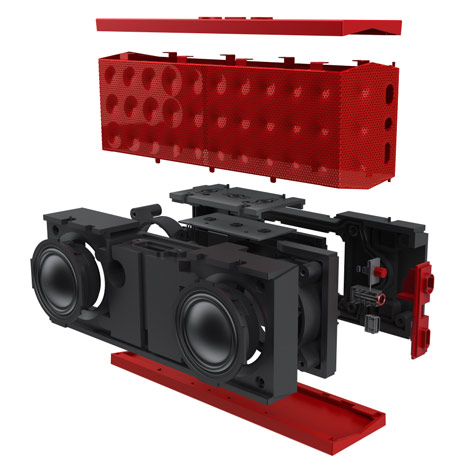
Since then the Jambox had hard times to survive, the price dropped and now Jawbone finally discontinued it. You won't find the original Jambox on their site anymore. Suddenly all copycats started to copy the Soundlink Mini, but so far I have not heard a single one which would come even close, despite all the criticism about muffled sound or boomy sound, the Soundlink Mini remains a pretty unique sounding speaker that small. The only speaker that might have an edge over the Soundlink Mini, although still not perfect, is the new Sony SRS-X3 that I reviewed here.
Unfortunately the Sony is even slightly larger than the Soundlink Mini. What is missing though, is a really portable solution, smaller, lighter, but still being able to produce a convincing and full-bodied sound. I tried many ultraportable speakers, like the JBL Micro Wireless, the TDK Trek Micro,... and although they sound quite acceptable for their size, they are still far away from impressive sounding.

In the meantime Jawbone had announced the Mini Jambox, a smaller and lighter version of the Jambox, and they had the chance to really improve things and make the speaker something outstanding. The Mini Jambox didn't seem to be the success Jawbone had expected, so the price fell pretty quickly too, and when the price jumped below 100€ I finally grabbed one to try it out and compare to some other speakers I currently had at home.

Designwise the Mini Jambox is a huge improvement over the old design. Not only the Mini Jambox is roughly half the size of the original Jambox, it is the aluminium body, the clean and polished look, and altough I still don't like most of the offered patterns ("diamond", "graphite", "snowflake", etc), the dottet one looks best and together with the neutral silver color the Mini Jambox manages to look just as classy as the Bose Soundlink Mini.

But what can you expect from something that small? The Mini Jambox is full of useful features that I would like to elaborate on a little bit and as my neighbour still owns the old Jambox, I also wanted to see if the shrinking made the sound much worse or maybe even improved some things?


What I really love about the Mini Jambox is its size. It is even smaller and lighter than the FoxL which I often carry inside my trousers pocket if I need a portable speaker. Usually I would have loved to take the Soundlink Mini instead, but it is just too large to really be packet away without being noticed. This is where the Jambox fits the bill. It slips into my shirt-pocket and I don't think about it anymore. It weights nearly 100grams less than the old Jambox and slightly more than 1/3 of the Soundlink Mini.

I especially like some of its features. The Mini Jambox supports multipoint pairing through Bluetooth and it is the first speaker I have tried where this functionality is finally implemented well. The Jambox Mini automatically reconnects to all already known devices unlike many other speakers where you have to force Bluetooth connection every time again. On the Mini Jambox this means that if you are already connected to it streaming some music and your wife comes home her mobile phone will automatically pair to the Mini Jambox as well and you will hear a confirmation beep. Now your wife could start playing some music, then your playback will be automatically stopped! Really cool, no need to reconnect, repair, or stop music. Just press play, and you can switch from one device to the other.
The Mini Jambox also supports wireless pairing with another Mini Jambox, Jawbone calls this Multiplay, which is possible in either unisono-mode or real stereo. I haven't tried that yet, but I am sure it should enhance listening experience even further. The pairing process seems pretty straight forward as you can see here.
Other new features include track control through the Play/Pause button, which was somehow missing on the old Jambox. With double press you can switch to the next track, three presses will take you a track back and you can of course take calls with the same button, as handsfree is built in as well. This is quite nice, as you can do nearly all directly from the Mini Jambox without having to touch your mobile phone at all as even the volume is now synced between the devices! Really helpful and how it has to be done in a Bluetooth speaker!
Thank godness the Mini Jambox also has the "silent mode" which turns off all sounds and voice-prompts. You enable it by keeping the play-button and minus-button pressed simultanously before turning the Mini Jambox on. Strangely the Mini Jambox will still hum with a deep bass note when turned on or off even sounding slightly distorted!

I was very curious to hear how the Mini Jambox sounds, as I have never heard it in person yet. The Mini Jambox seems to use the same new slim drivers of the FoxL Dash7, otherwise such a compact body wouldn't be possible. The battery is still acting as passive radiator, but it is forward firing this time, making the back completely closed without any grille but with the same front-pattern. Allthough bass is rather non-directional it is still better to have it emit directly frontally rather than to the back, like it was on the old Jambox otherwise you would always need some back-wall to reinforce it, because when standing completely free it would rather get lost in the distance.

According to Jawbone there is a DSP on board now, that's why the sound is so "incredibly rich" at lower volumes. Well, in reality it is everything else than rich. My impression was that it sounds like an old muffled transistor radio when I played some first tunes. The loud power on tone will sound more powerful than every music you throw at it and the Mini Jambox sounds even more veiled than the Bose Soundlink Mini. Especially at low levels I could hardly hear any of the claimed richness.
Before going into detail, I will first post a frequency response measurement which shows how the Mini Jambox compares to the Soundlink Mini. Volume was normalized with pink noise at 65dB for both speakers, which corresponds to pleasant background listening volume. As you can see the frequency response of the Mini Jambox is surprisingly flat (within +/- 3dB) from about 170Hz to 12kHz, but there is hardly any bass below 100Hz with rolloff already starting at 170Hz while treble already starts to fade above 12khz which seems to be the reason for the even duller impression the Mini Jambox gives over the Soundlink Mini. The Mini also has strong treble rolloff above 12kHz but the whole frequency-band above 3kHz is already boosted, so it won't stand out that much. You can also see from this curve how much more bass the Soundlink Mini is able to produce:

Now comparing the Mini Jambox to the original Jambox, the differences are not huge at the first look. The old Jambox doesn't have this strong treble roll-off, but it has quite a big dip at 12kHz.

This could be interpreted as a big advantage for the Mini Jambox being able to produce similar audio despite being nearly half the size, or also a big letdown because the Mini Jambox is not able to offer that much improvement over the old version. In reality it is indeed an improvement. Although both still sound pretty similar, the Mini Jambox sounds less stressed with a more solid sound, while the old Jambox sounds rather compressed and somehow dirty. This is especially noticeable at higher levels on the old Jambox, where you will hear distortion creeping in already far below maximum, while the Mini Jambox will overall sound cleaner. Both have a comparable maximum volume, depending on the music either the Mini Jambox or the old Jambox can be slightly louder. But while the old Jambox compresses dynamics to achieve a higher maximum volume (similar to what Bose does with the Soundlink Mini at levels above 75%), the Mini Jambox remains without that obvious dynamics processing resulting in a more natural sound but with slightly less bass at the same time. With some tracks you might even notice pumping effects with the old Jambox, which means that the whole music suddenly becomes lower when a bass sound is played to become louder again when there is no bass anymore. I haven't noticed anything like that with the Mini Jambox.
Things change a bit if you enable "Liveaudio". Liveaudio does not only open the stereo-image quite much, but it has also some influence on the overall frequency response. With Liveaudio the Jambox gains quite a bit of bass and it becomes clearer with higher frequencies at the same time. The difference doesn't look serious from the graph, but including the enhanced stereo-field the sound becomes much more profound and large. I think it is especially the BACCH crosstalk canceling filter (this is what Liveaudio is based on) which adds to the overall effect.

The Mini Jambox seems the first speaker where Liveaudio really is a benefit, assumed the listener and the speaker are located at optimum positions. I have tried Liveaudio on the old Jambox and on the BIG Jambox, but neither of them was sounding that convincing as the Mini Jambox. Maybe the filters were tuned even better now, or the drivers are just better in the new version, because with the old Jambox I got pretty heavy resonance issues when I tried to listen to some music with Liveaudio turned on.
Liveaudio usually works best with binaural recordings, it works with normal stereo-recordings too, but you might get overly exaggerated stereo-effects. With binaural recordings the effect will be outstanding and very realistic though. I have listened to some nature recordings and with the Mini Jambox placed directly in front of me I got the impression of being totally surrounded by sound, it is more impressive than a 5.1 surround setup. I didn't experience lots of back-localisation, but the sound comes much farther from beyond the speaker edges, than most other stereo enhancing algorithms I have heard so far. The best distance seems to be around 50cm from your ears. You can also try longer distances up to 1 meter, but 50cm seems to be the sweet spot. For biggest effect just lay down on your couch and place the Mini Jambox on your belly. You will probably have to lay it down flat, otherwise it won't stand upright, except if you have a hard and flat sixpack. Now play some binaural recordings like the youtube video above, or listen to Ottmar Liebert's "Up Close" which was recorded with a real dummy head, and enjoy!
Thanks to Liveaudio finally binaural recordings can be enjoyed through speakers as well, otherwise binuaral stereo only worked well with headphones.
The problems start when the speaker is not placed optimally anymore. Turn the Mini Jambox away slightly so that the drivers are not facing you anymore and you will notice that the mix starts sounding different. Reverb effects become more pronounced, background sounds might become too loud. Keeping Liveaudio on whole the time is not a solution if you just want to place the Mini Jambox somewhere and walk around, as it will really only sound good when placed in front of you at the perfect distance or close to it.
Another issue is Liveaudio introduces a slightly lower maximum volume, this is probably due to the crosstalk filtering, which has to compensate for some frequency loss and therefore boosts several frequency bands to avoid sound colorations. It is not that severe as on the old Jambox which became about half as loud with active Liveaudio, but on the Mini Jambox Liveaudio will still give a slightly lower maximum volume than without. When switching between both settings you will also notice how the volume-bar on your player jumps up or down, as Jawbone tries to match both levels not to make this difference that obvious. It is just at maximum volume, where you cannot match them anymore.

A bigger issue is that the Mini Jambox cannot reach a very high volume at all. Good thing is, the Mini Jambox doesn't show any distortion issues even at top volume. Some reviewers seem to have noticed mid-frequency distortion, but I found the Mini Jambox to play very clean up to its maximum volume. The old Jambox was much worse in this regard as it showed both distortion and stronger dynamic processing while not being able to play louder at all. But meanwhile most comparable speakers play nearly twice as loud, like the JBL Flip for example. Even smaller mini speakers like the JBL Micro wireless will play louder than the Mini Jambox and just for fun I even tried putting a cheap Music Angel which you can already get below 10$ against the Mini Jambox, and although the Music Angel sounds pretty harsh and by far not that balanced or full bodied, it will play nearly equally loud, which is a bit embarassing if you ask me.


The only speaker which has even more loudness-issues than the Mini Jambox is the Soundmatters FoxL (I still have the 2.2 Version). Although the FoxL can play quite a bit louder it will already distort quite heavily at levels where the Mini Jambox still sounds clean. But this is probably the price you have to pay for a speaker that small, still I would have loved a little bit more power and a little bit more bass-punch especially at low levels. I measured the Mini Jambox at 55, 65, 75dB and at maximum volume and you can notice a stronger bass reduction at maximum volume, but the claimed bassboost at lower levels is hardly noticeable:

For a better view I normalized the graphs for all volume levels shown above, and you can indeed see slight differences in the amount of bass and treble depending on the volume, but from 65dB down to 55dB there is less than 4dB of bass increase, and while 55dB is already quite a low volume, the frequency response seems most linear at this level only to further reduce bass and treble at higher volume settings. In my opinion it should be the other way round, more bass-boost at lower levels, and a rather linear response at 75-85dB.


It is only when directly compared to the old Jambox or the FoxL, that the Mini Jambox sounds slightly more full-bodied at lower levels (the example below was measured at 55dB). Here you can really notice an advantage for the Mini Jambox and that the dynamic processing although subtle does its job.

For my taste it is just not enough, I don't expect the boomy kind of bass Bose usually does, but a bit more punch would be welcome, therefore I tried playing around with various equalizing apps for iOS and found that the Mini Jambox responds pretty well to stronger frequency boosts without producing any kinds of artefacts or distortion, this is probably also the reason why Liveaudio works so much better with the Mini Jambox, as the sound remains stable even with stronger equalizing. For my taste Bongiovi DPS gave the best result because usually with most apps you have to lower the gain if you boost some frequencies too much. Bongiovi DPS on the other hand seems to really boost the overall sound and manage to keep the same volume at the same time unlike the preset EQs from Apple like "bassbosster" that rather takes away high frequencies instead of boosting lower ones. With the Bongiovi DPS app the Mini Jambox sounded best when enabling the "Annapolis" profile and adjusting the EQ for additional bass and treble boost like this:


With this setup the Mini Jambox will sound fuller and larger and it will even play slightly louder than without any processing. Of course processed like this there might be some slight distortion introduced on very bassheavy tracks when played at higher levels, but overall distortion is still pretty well under control, what surprised me most. Such a strong bass-boost would not be possible with the old Jambox, because the whole body would buzz and rattle. However Bongiovi is better suitable for lower levels, as a kind of poor man's loudness function, which unfortunately is not dynamic. Of course one can go even further and try using Bongiovi together with Liveaudio for maximum effect, this will result in a really BIG sound and interestingly obvious processing artefacts or stronger distortion are still missing, at least if you don't exaggerate setting the volume too high.
I tried to prepare a video where I switch between normal audio, "Liveaudio" and the Bongiovi processing. I think Bongiovi DPS manages the most convincing audio boost, although it won't give you that strong stereofield from "Liveaudio". Both Bongiovi DPS together with Liveaudio sound most impressive although it might already appear a bit exaggerated, have a listen:
I also experimented with flat positioning which can boost bass even further on particular surfaces. It is a pity that Jawbone didn't think about this feature and made the back-side completely rubbered, because due to the single passive radiator the Jambox can vibrate slightly. When laying flat it tends to rattle against the base at higher levels, some cloth or fabric below will help to avoid any rattling.
The vibration is not as strong as with the old Jambox btw. and I didn't notice any problems with stonger creeping or dancing around, the Mini Jambox usually keeps its position, but the bottom surface only has 2 little rubber feet, which are not enough to securely keep the Jambox stable on uneven surfaces. I tried positioning it on concrete several times and I could feel how the aluminium was touching the base, instead of the rubber feet. The whole bottom should have been one big rubber foot, because as it is now any less smooth surface might scratch the body from below, especially at higher levels, where the Mini Jambox starts to rattle against the base.

I think as personal speaker and not so much as party speaker the Mini Jambox can mostly convince. It won't give you the heavy sound of Bose, but with enabled Liveaudio and the right recordings it can sound very appealing. I would have only preferred some stronger sound adjustment at lower levels. But even now the Mini Jambox sounds better than most models from the competition that are by far not as portable and compact. I found the Mini Jambox to sound more natural than the JBL Flip which has an extremly boosted treble, while having even worse bass extension despite being larger, on the other hand the JBL Flip doesn't suffer that much from treble loss when heard from an angle, while the Mini Jambox will sound rather dull, you cannot have it all!


I also found the Mini Jambox to outplay the Sony X2, especially with enabled Liveaudio the sound coming out of the Mini Jambox was heavier and more impressive.


I prepared a video with a direct comparison to the original Jambox. I think you can hear that the Mini Jambox sounds somewhat less stressed, especially at maximum volume the original Jambox shows obvious distortion, while the Mini Jambox stays pretty clean even with active Liveaudio, which becomes pretty distorted on the original Jambox.
Here is another video comparing the Mini Jambox against the Bose Soundlink Mini which might appear a bit unfair due to the size difference. But originally the price difference between both was not that high, therefore someone how doesn't care much about size, will probably decide on sound quality alone:
The only thing you might be missing from the Mini Jambox is high volume. So if you need high volume by all means, look somewhere else!
I would have never paid the original asked price, but below 100$ the Mini Jambox might be quite a good choice for an ultraportable speaker. Although meanwhile there are lots of different options from other companies, none of them is really that small, and none of them sounds really that much better (except louder of course)! In any case the Mini Jambox is a big improvement over the old Jambox, which now gives an even more toyish impression. I am also finally going to sell my FoxL now, as it will be replaced with the Mini Jambox. The FoxL has still a surprisingly more refined sound although I was finally hoping for something that would outperform the FoxL. Nevertheless the Mini Jambox is the much better speaker with considerably better features, longer Bluetooth reach, better shielding against mobile radio and just better design, not to forget Liveaudio which really sounds great with the Mini Jambox now.
Now I still hope for some similar sized model, which might add a bit more loudness and even better bass extension with all the nice features the Mini Jambox already offers now.
By the way what about a "Soundlink Micro", Bose are you listening?
Maybe such a small speaker from Bose will finally sound more balanced, as they probably won't be able to push bass as much!

+ great design and high quality aluminium finish
+ smaller and more portable than similar models
+ balanced sound without obvious frequency-humps
+ Liveaudio adds fullness to the sound and incredible 3D-effect to binaural recordings
+ multipoint Bluetooth connections with automatic repairing
+ pairing of 2 speakers for unisono mode or wireless stereo
+ synced volume between streaming device and speaker
+ track control through the speaker
+ no distortion up to maximum volume
+ all unnecessary voice prompts or sounds can be turned off completely
+ long battery life
+ allows firmwareupdates
- muffled treble (no upper treble above 12kHz)
- too light on bass (hardly any response below 100Hz)
- maximum volume lower than the competition
- hardly noticeable dynamic equalization, thefore thin sounding at lower levels
- Liveaudio might sound overdone with many standard stereo recordings
- can rattle on particular surfaces
- very small rubber feet, so bottom can scratch easily
- original price too expensive for given performance
Subscrever:
Mensagens (Atom)